2.Overview
In the Mixing process, slurry for electrodes is manufactured. In the positive electrode slurry, lithium compounds (such as LiCoO2 or LiFePO4), conductive additives (such as carbon black), and binders (such as polyvinylidene fluoride: PVDF) are mixed with solvents. In the negative electrode slurry, negative electrode materials such as graphite are mixed with solvents.
In this process, special mixing equipment and techniques are used to efficiently mix slurries with high viscosity. The mixing conditions (rotation speed, temperature, time, etc.) are carefully controlled as they have a significant impact on the characteristics of the materials and the performance of the final product.
3.Importance
The Mixing process is a crucial step in the manufacturing of lithium-ion batteries as it directly impacts their performance, lifespan, and safety.
Insufficient uniformity of mixing can result in localized material segregation within the electrodes, leading to decreased battery capacity and accelerated degradation during charge-discharge cycles. Failure to achieve proper dispersion of fine particles can cause uneven conductivity, increased internal resistance, and a higher risk of thermal runaway. Furthermore, the Mixing process also affects production efficiency. Without proper mixing, there is a risk of reduced yields in subsequent processes such as coating and drying, leading to an increase in defective products. Thus, the Mixing process is essential in the manufacturing of lithium-ion batteries to ensure the physical properties of the materials and achieve high-performance batteries.
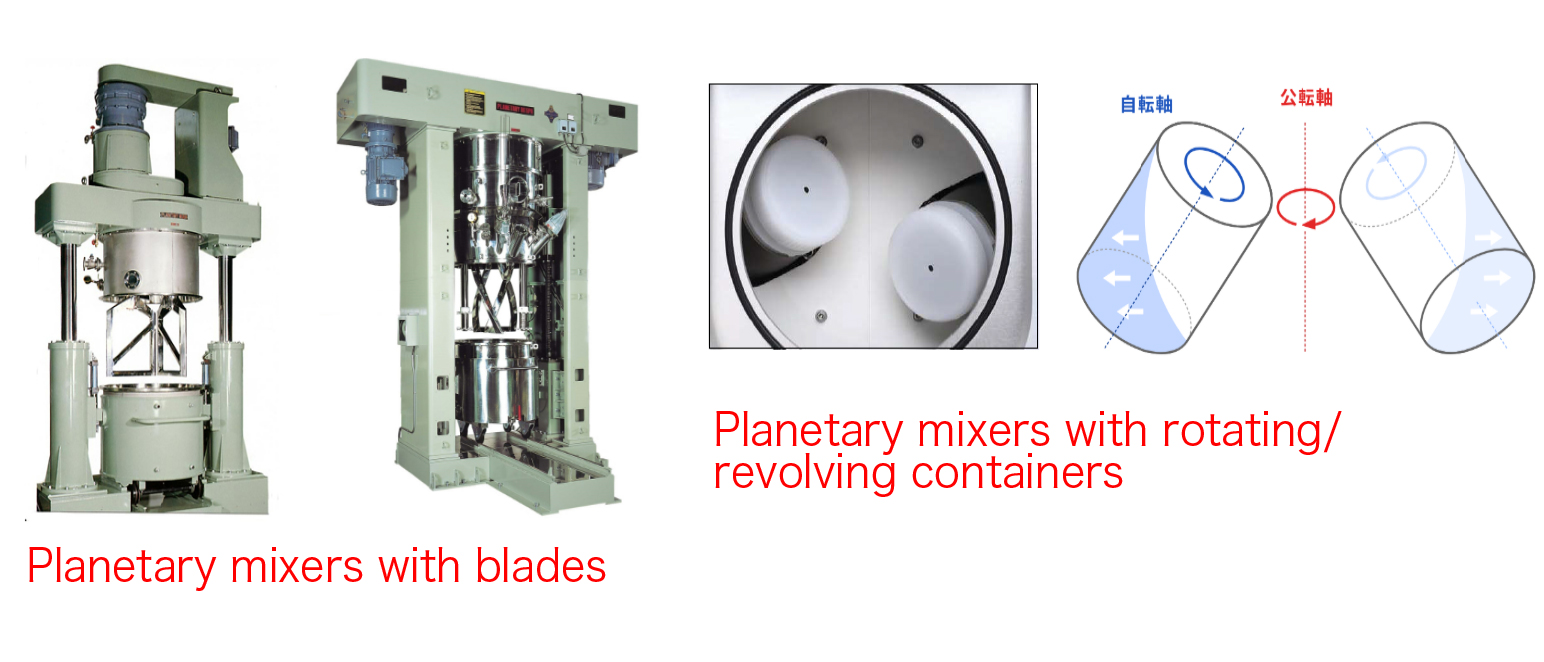
4.Equipment
The equipment used in this process is mainly either batch-type or continuous-type, each with its own characteristics.