Capacity:~ 2400KG/Hr
Vibration : ~ 1800(V.P.M)
Mesh Size: ~ 0.57m3
※We will propose a winder that meets your desired specifications.



In the classification process, the milled powder is sieved to remove contamination and large particles. The classification process not only improves the quality of the material, but also has a significant impact on battery performance. This is because the sieving process ensures that the material becomes a fine slurry and uniform coating can be achieved. We offer classifiers of different methods, from R & D scale to production scale.
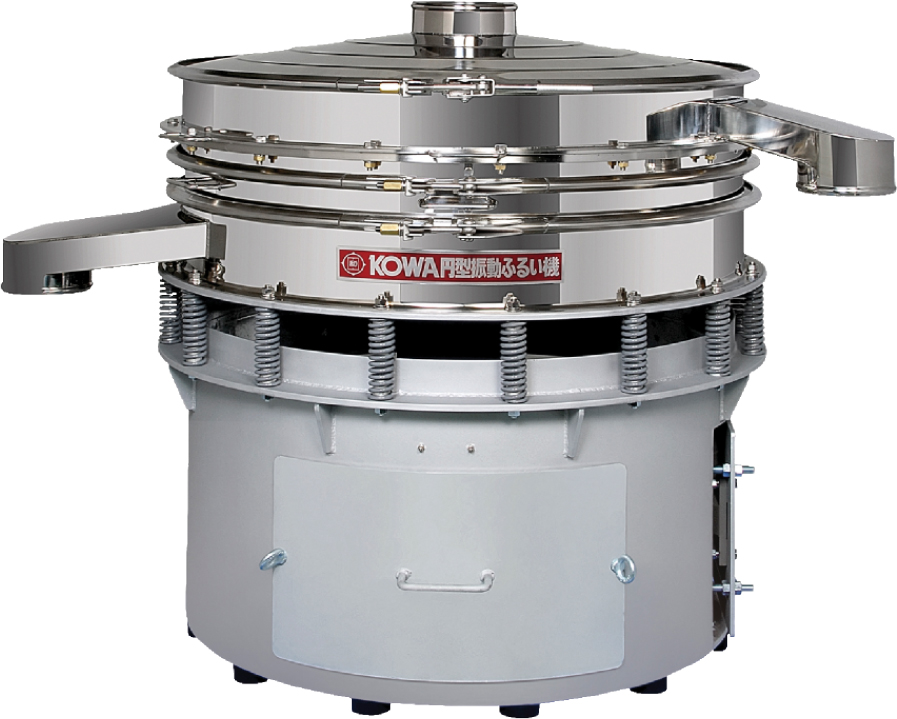
Capacity:~ 2400KG/Hr
Vibration : ~ 1800(V.P.M)
Mesh Size: ~ 0.57m3
※We will propose a winder that meets your desired specifications.
Features
Ultrasonic unit
Uses ultrasonic waves to vibrate the mesh to achieve more efficient classification. It is 4-30 times more efficient than without ultrasonic. Another advantage is that clogging does not occur and tapping balls are not used, minimizing the risk of contamination.
High yield rate
Not only the accuracy of classification, but also the high yield is an important indicator of the performance of a classifier. KGK offers equipment with a high yield that minimize the amount of powder remaining inside the machine.
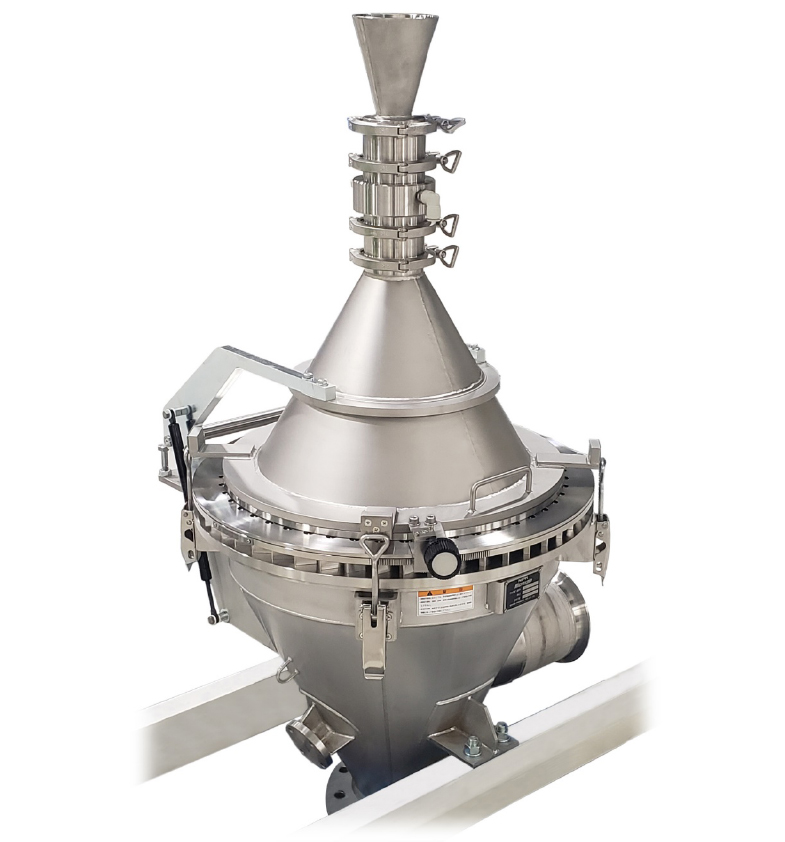
This classifier is based on a completely different concept to conventional sieve-based classifiers. In an airstream classifier, the material is fed into a swirling airstream and only particles of the correct size are collected, using the weight difference according to size. The classification point can be set arbitrarily and sieving can be carried out with high classification accuracy. Another major advantage is that the risk of contamination because only the air is used for classification..